The DISC model is closing in on its hundredth birthday, and for most of that century the assessment itself has barely changed: a page of statements, a 1-to-5 scale, a report. That is finally changing. Here are the seven biggest DISC assessment innovations, what each one fixes, and where you can try them today.
A model that outlived its format
DISC began in 1928, when psychologist William Moulton Marston described four dimensions of normal human behavior. The questionnaires came decades later, and the format they settled on, rating yourself statement by statement, has stayed frozen ever since. The model aged well. The delivery did not. Self-report is abstract, colored by mood, easy to game, and dull enough that many people never finish. Every innovation below attacks some part of that problem.
1. Stories instead of statements
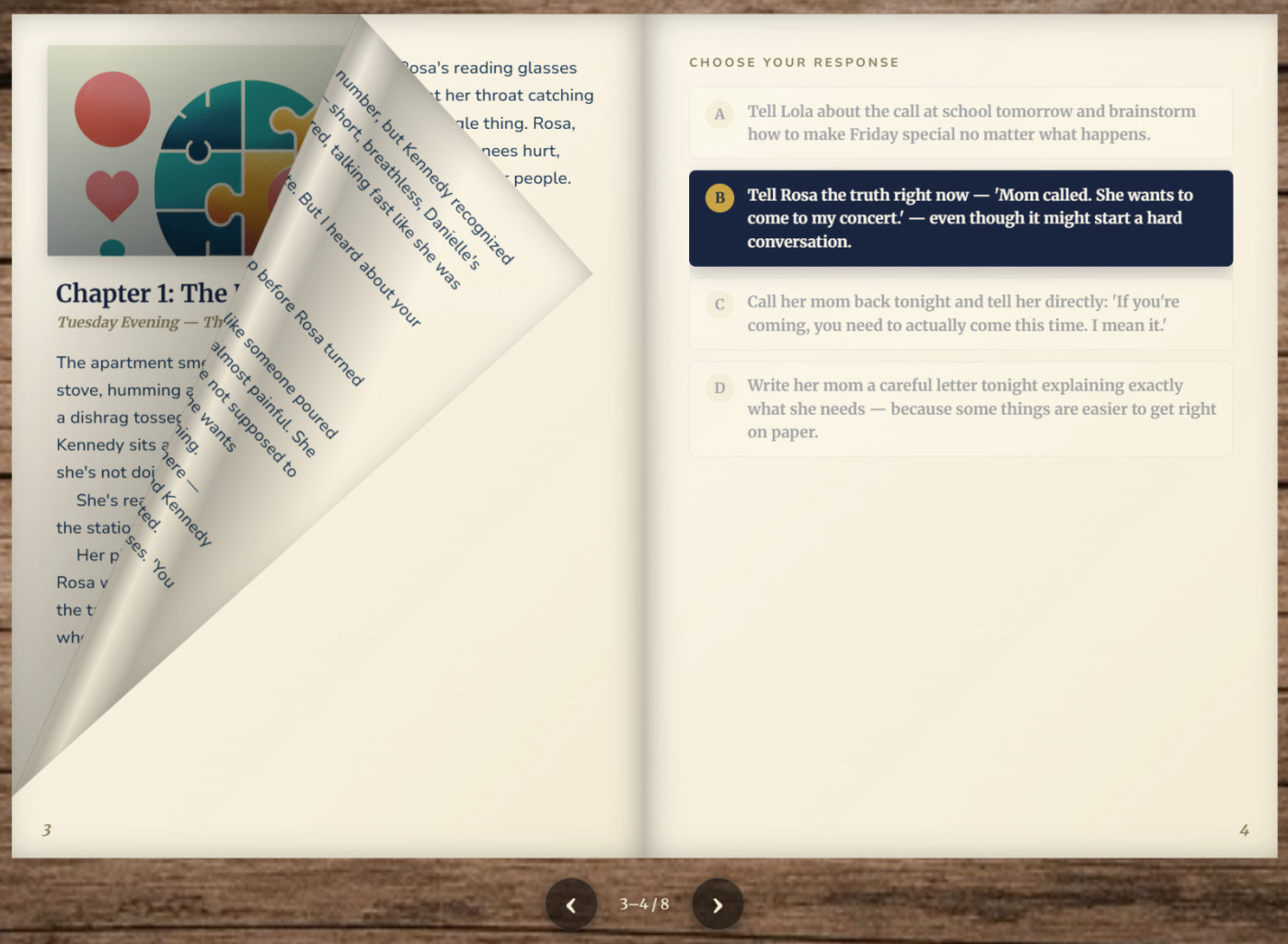
The biggest shift: replacing "rate yourself" with "show us." In a story-based DISC assessment, you step into a scenario and make real choices under pressure, and each choice quietly maps to a trait. You are focused on the story, not on what the question is measuring, which is exactly the honest signal a self-report struggles to capture. We have a full breakdown of why choices beat checkboxes.
2. Branching scenarios that respond to you
A questionnaire is the same 40 items for everyone. A modern story assessment branches: choose to confront the rival and the story goes one way, choose to protect your friend and it goes another. Branching makes the experience feel alive, makes it far harder to steer toward a "right answer," and collects richer signal because the situations adapt to the reader.
3. A profile built from a library, not a single sitting
One test on one day is a snapshot of a mood as much as a person. The newer approach treats the profile as something that accumulates: every story you finish adds evidence, and the picture sharpens over dozens of adventures instead of freezing after one. That is why we built a whole library rather than a single test. Your profile matures the way you do.
4. Results that speak the reader's language
The same science does not need the same vocabulary for a 7-year-old and a 47-year-old. Modern DISC reporting adapts: adults can read a classic four-trait breakdown, while kids meet friendly archetypes and personality birds, with an Eagle where a report would say Dominance. Children get language they can actually use ("I'm a planner, so surprises are hard for me"), and parents still get the full picture. Here is how that works in our kids experience.
5. Assessment as motivation, not interruption
The most surprising innovation: making the assessment something kids want more of. When stories unlock in sequence like the Press Start series, and reading earns tokens, treasures, and new worlds, the personality assessment stops being a task and becomes the engine of a reading habit. The measurement rides along on genuine motivation, which also makes the data better; an engaged child gives real answers.
6. From "who am I?" to "how well do we read each other?"
Classic DISC ends with an individual report. The frontier is relational: mapping how a whole family or classroom fits together, and even letting family members guess each other's styles to see how well they truly read one another. Understanding that your high-D daughter and high-S son experience the same dinner-table debate completely differently is where the model starts changing daily life. Start with understanding your family with DISC.
7. Living dashboards instead of PDF reports
The traditional deliverable was a static report that aged in a drawer. The modern one is a dashboard that updates with every story: parents watch a child's profile develop over months, and teachers see a whole class at a glance, with each student's assessment history behind one click. The assessment becomes an ongoing instrument rather than a one-time event.
Try the reinvented version
Every innovation on this list is live in one place: a growing library of story-based DISC assessments for adults, kids, and beginning readers. Browse the library and step into a story, or see the kids experience. The first assessment is free, and it will not feel like a test. That is rather the point.