If you've ever watched two children face the exact same moment, a new classroom, a lost game, a group project, and react in completely different ways, you've already seen DISC in action. DISC is a simple, research-backed way to make sense of those differences. Here's what it means for your child, and how to discover their type.
What DISC actually measures
DISC describes four natural tendencies in how a person acts, communicates, and makes decisions. Almost every child is a blend, usually with one or two traits leading the way:
- D — Dominance: Direct, decisive, and driven. These kids love a challenge, take charge, and want to win.
- I — Influence: Social, enthusiastic, and expressive. These kids light up a room and lead with energy.
- S — Steadiness: Calm, loyal, and dependable. These kids value harmony, help others, and like a steady pace.
- C — Conscientiousness: Careful, curious, and precise. These kids ask "why," notice the details, and want to get it right.
There is no "best" type. Each trait is a real strength — and a big part of growing up is learning when to lean on it and when to stretch toward the others.
Why DISC helps children, not just adults
When you understand your child's DISC style, everyday friction starts to make sense. A high-D child isn't "bossy" — they're wired to lead, and they thrive when you give them real choices. A high-S child isn't "shy" — they're steady, and they shine when change comes with a little warning. Naming the strength changes the conversation from "why won't you just…" to "here's how you're built, and here's how to grow."
It also gives kids language for themselves. A child who can say "I'm a planner, so surprises are hard for me" has a head start on self-awareness that most adults never get.
Why a story works better than a questionnaire
Traditional DISC tests ask you to rate statements like "I am assertive" from 1 to 5. That's fine for adults. For a child it's abstract, easy to game, and honestly a little boring — and bored kids give unreliable answers.
Children reveal who they are through choices, not self-ratings. That's the whole idea behind a story-based DISC assessment for kids: your child steps into a scenario — a day at the park, a big tournament, a mystery to solve — and simply decides what their character does next. Each choice quietly maps to a DISC trait, so the profile that emerges reflects how your child actually thinks, not which box they think they're supposed to check.
What your child sees vs. what you see
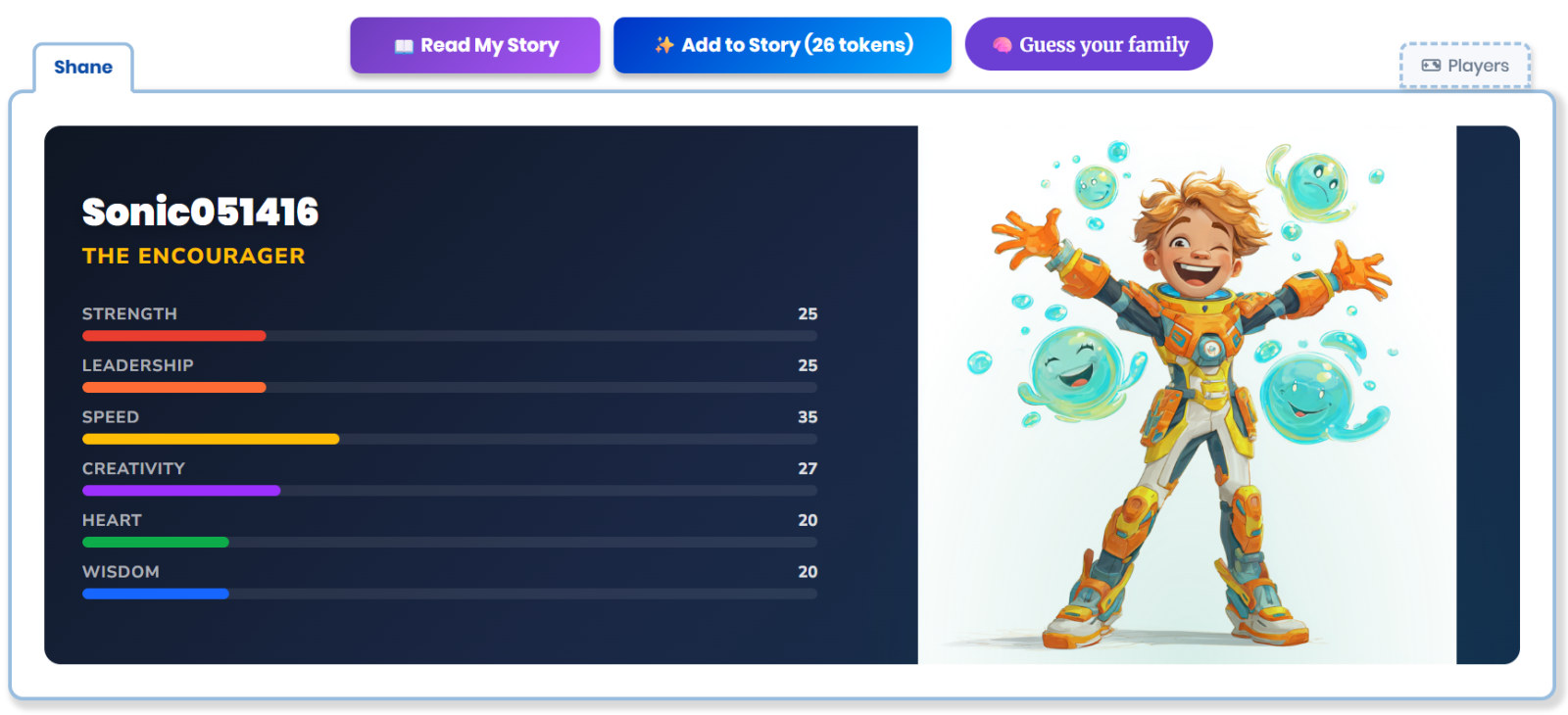
Here's something that surprises a lot of parents: your child never sees a clinical "D-I-S-C" chart. In the kids' experience, their results appear as a character profile, a hero with a fun archetype (like "The Encourager") and game-style stats they grow with every quest. The DISC assessment runs quietly underneath, powering the story and the profile, while the four-trait breakdown lives on your parent dashboard. Your child gets the adventure; you get the insight.
How to discover your child's type
You don't need to be an expert or run a formal test. The easiest way to start is to let your child play through one short story and watch what they choose. (Comparing tools? Here's our full guide to choosing a DISC assessment for kids.)
You can browse the assessment library or see how the kids' experience works — each completed quest builds a personalized storybook that grows with your child, and their first assessment is free.