Reading scores in the United States have slipped to some of their lowest levels in decades, and the share of kids who read for fun keeps falling. But here is the part most headlines miss: for most children, the problem was never that they cannot read. It is that nothing makes them want to.
The real reading crisis is a motivation crisis
Walk into almost any classroom and you will find kids who can decode the words on a page just fine, yet close the book the second they are allowed to. Reading has become something they do because an adult told them to, not something they choose. And a skill a child only practices under protest is a skill that grows slowly.
We keep trying to solve this with more of the same: more worksheets, more required minutes, more reading logs to sign. Those things measure reading. They do not make a child love it.
Why "just read for 20 minutes" backfires
Assigned reading minutes turn reading into a chore with a timer attached. The child watches the clock, not the story. The lesson they absorb is that reading is work you get through, not a world you get to enter. For a reluctant reader, that is exactly the wrong message.
The fix is not to push harder. It is to flip the reason. What if reading were the thing kids asked for, because reading was how they got somewhere they wanted to go?
What if reading were the reward?
That is the idea behind The Assessment Library. Kids do not read to hit a quota. They read because every story they finish earns something, and that something builds a world that is theirs.
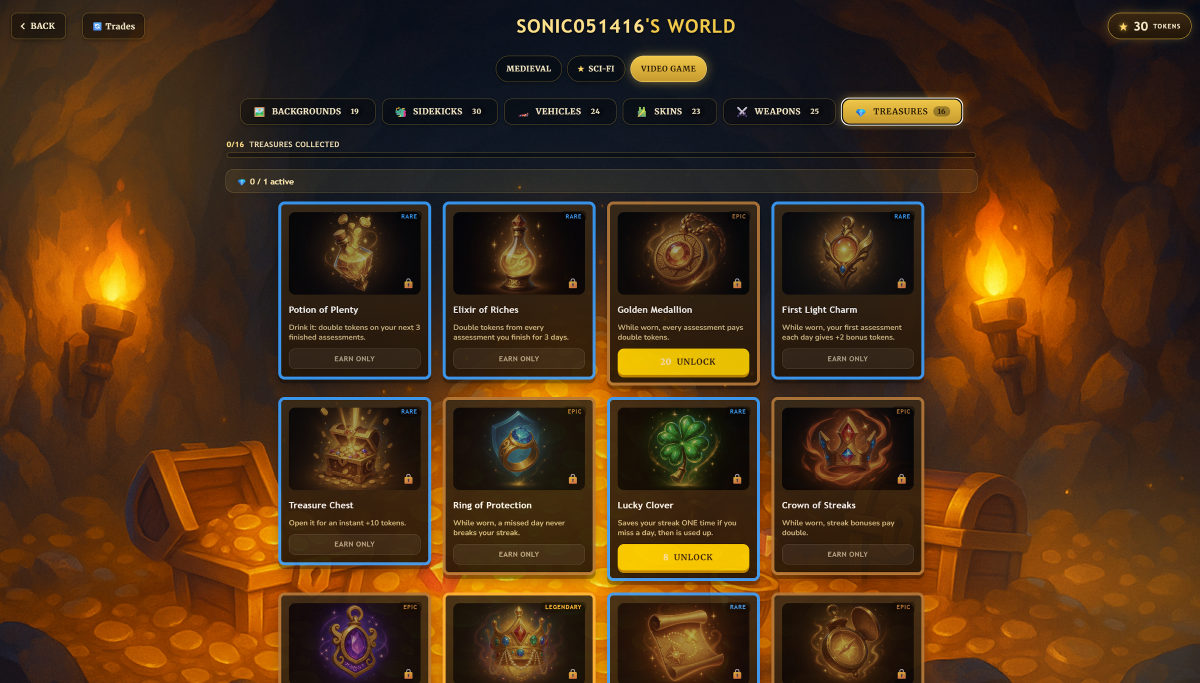
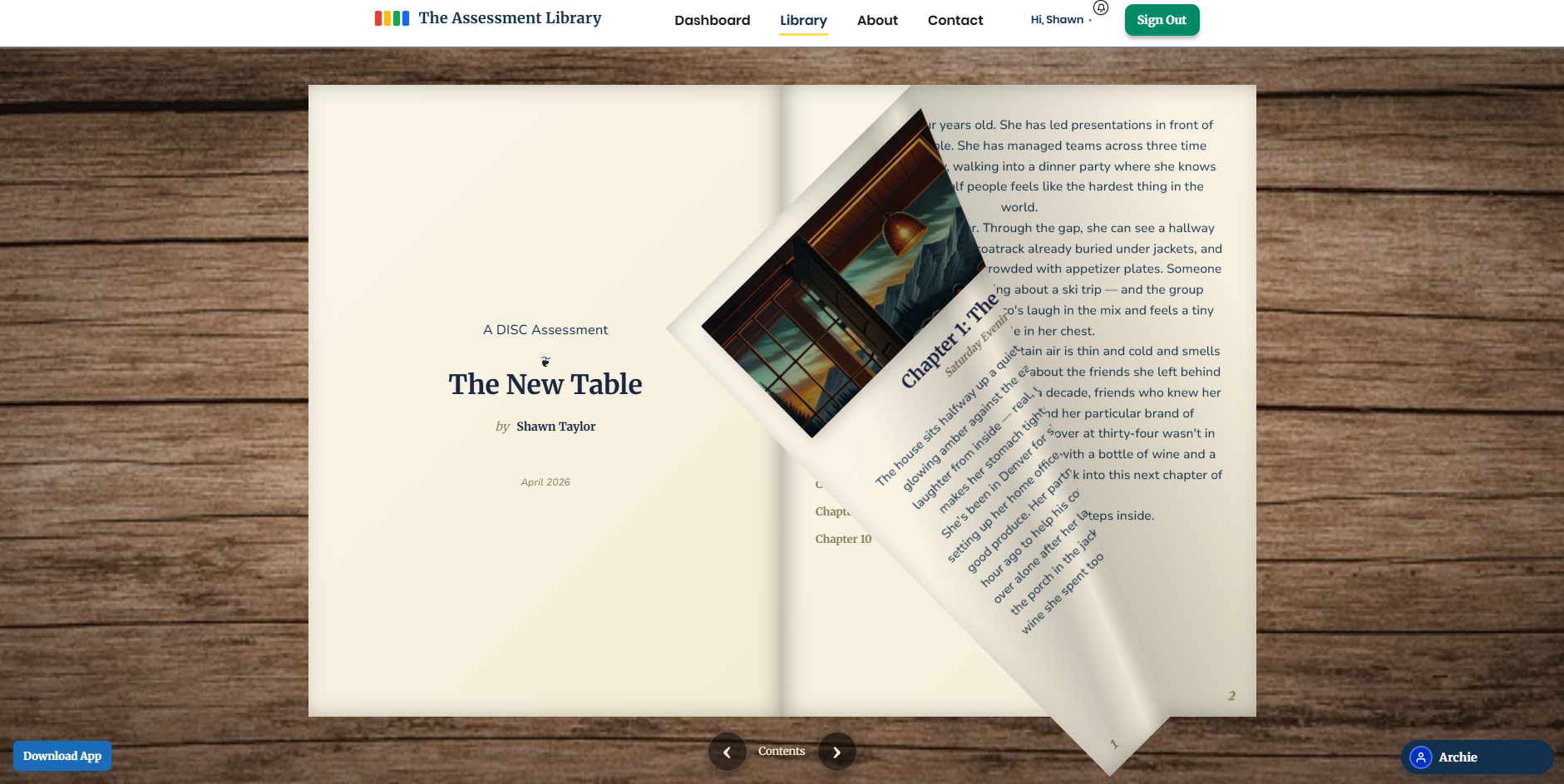
Here is how it works. Each book is an interactive story-based adventure where the child makes the choices. Finishing a story earns tokens. Tokens unlock treasures with real in-game powers, sidekicks to collect and trade, new worlds to explore, and upgrades for the child's own hero. Reading is not the homework. Reading is how you win.
A world worth reading for
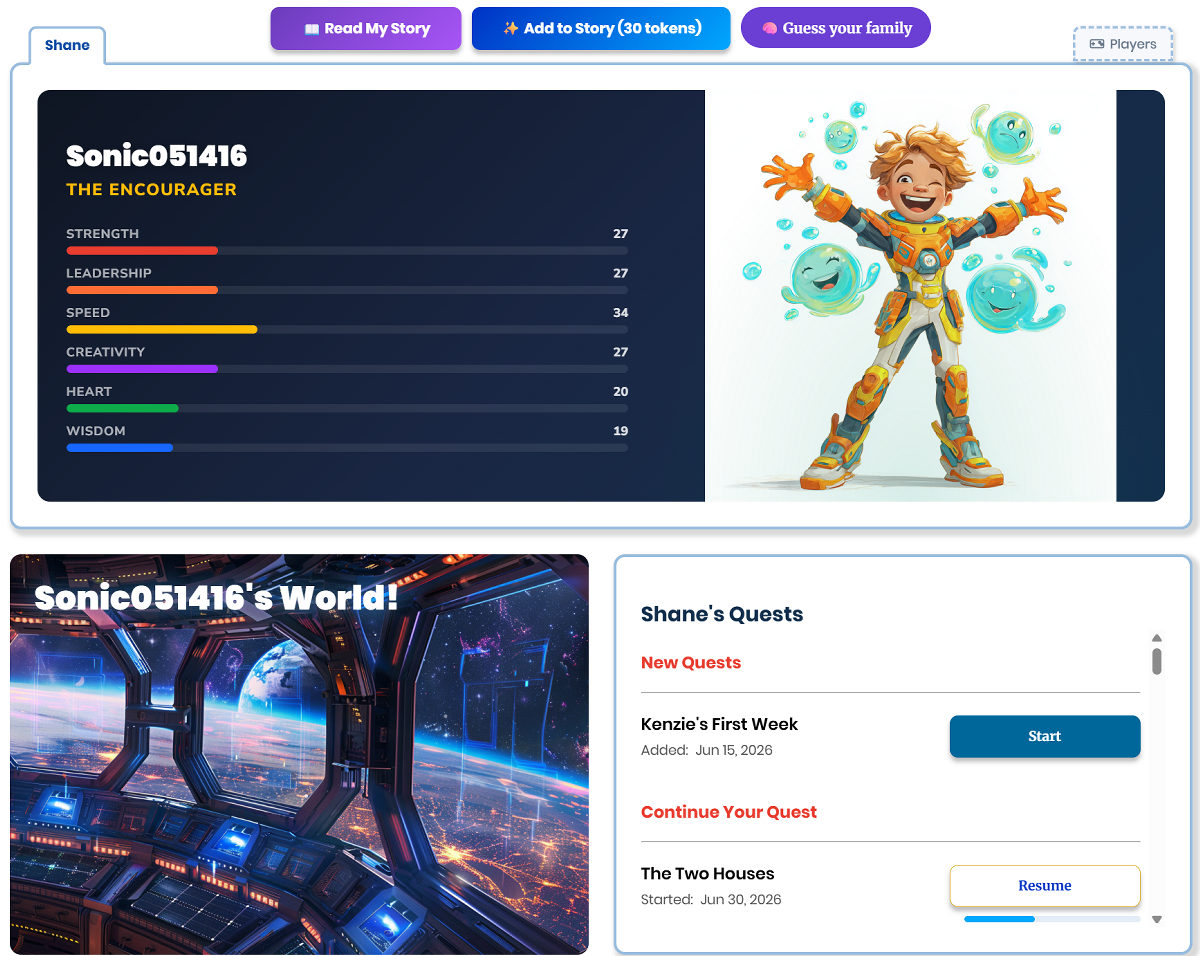
The magic is not the rewards by themselves. It is that the rewards belong to a world the child is building. A kid who unlocks a new world, or finally collects the sidekick they wanted, has a reason to open the next book that no reading log can manufacture. Their profile becomes a hero with stats and quests, and it grows every time they read.
Reading practice, disguised as an adventure
Because the child keeps reading by choice, the practice adds up fast. And every adventure quietly builds something else: a picture of who they are. Each book is a story-based assessment, so as kids read, their personality profile grows, shown in kid-friendly language as four friendly birds. Parents and teachers get real insight. Kids get a story they cannot wait to continue.
For teachers and homeschoolers
If you are trying to get a whole class or a homeschool group excited about reading, this is the difference between pushing and pulling. Kids pull themselves through the books because they want what is on the other side. Meanwhile, your educator dashboard shows you who is reading, how engaged they are, and how each student is wired to learn. For more classroom tactics, see our guide on how to get kids to read more.
We are running a free classroom pilot this semester: every family comped, parents in full control of their child's data, and your only cost is honest feedback. If your students need a reason to want to read, this is it.
The bottom line
The reading crisis will not be solved by asking kids to read more of what bores them. It will be solved by giving them something they want to read, and a reason to keep turning the page. When reading becomes the adventure instead of the assignment, kids do not need to be told to read. They ask to.
Want to see it in action? Browse the library and start a story. Every child's first assessment is free.